
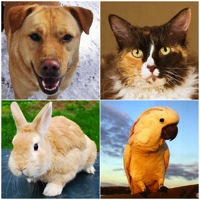


From shaking hands with your friends to earning an Obedience title; from hide-and-seek in the living room to Agility competition in a coliseum; a multitude of exciting a activities await you and your dog. Many events welcome all dogs, purebred or mixed. Others allow only registered purebreds, while some showcase dogs which were bred to do specialized work, such as herding or coursing. Most dogs are suited for several fun and functional activities, and doing them together builds an even stronger bond between you and Spot.
Physical and Educational Games for Dogs
Just as children learn through playing with educational toys, play conditioning is a great way to educate dogs. Most healthy, well-adjusted dogs learn physical games in a jiffy. In fact, if Spot has a high activity level and you don't teach him a few games, he may create his own and invite you to join in. Dogs also like to play mental games and the whole family can participate in the fun. Mental games will develop Spot’s memory, making all types of training come easier.

Keep the mood light when playing games with Spot, but always appoint yourself, not him, team captain. No matter which one of you starts the game, you should be the one to end it. Fun becomes work if you play until Spot is bored or tired, so call it quits while he is still avidly engaged in the game. Calling time out if the sport becomes too rowdy is also the captain’s duty. Be consistent, and Spot will soon learn the rules and limits of each game.
Dogs that were never socialized or were abused or neglected may not play games for several months. But don’t conclude that Spot must have been deprived in the past just because he won’t play right away. Spot probably won’t feel like playing until he adjusts to his new home. He may be in mourning, or insecure in his new surroundings, and just needs more time. If fun and games don’t interest Spot after his first few weeks in your home, don’t despair. First, check your attitude. Maybe you’re trying too hard and making it look like work instead of fun. Next, check your timing. Was Spot full from dinner, or even sleeping, when you invited him to play? If a change of attitude or timing doesn't help, the following suggestions might.
Help for Serious and Sullen Dogs
While some dogs change owners with ease, others fret and grieve and need time to relax and accept their new family. Only then will they be secure enough to enjoy games. Other dogs don’t play because no one ever played with them and they simply don’t know how. Their progress may be frustratingly slow at first, but once they catch on they often make up for lost time. A few dogs are too timid to play, but once they accept affection without fear, their sense of humor may suddenly surface. An occasional dog suffers shock from its sojourn in the animal shelter and is unable to relate to its new surroundings. Your love and patience will eventually bring it out of its apparent apathy, and into a world full of fun and games.
Making Spot Charming
No matter what caused Spot’s problem, one thing is certain. If he’s still a solemn dog after he trusts you, you’re going to have to get silly first and encourage him to follow suit. Choose exciting toys, like a squeaky rat made of fake fur or a bouncy latex hedgehog, then play with a toy yourself while Spot watches. Throw it, catch it, drop it. and chase it. Have a great time playing with the toy, and occasionally tease Spot with it, but don’t give it to him. Family and friends can join in the fun, tossing the toy to each other and rolling it across the floor, but don’t let the game get wild enough to frighten an insecure dog. After two or three minutes of continuous (but not rough) fun, “accidentally’’ drop the toy near Spot and see if he mouths it. If he ignores it, pick it up and continue playing for another minute or two. Then put the toy away until another day.
The first time Spot takes the toy, allow him to play with it without interference for about thirty seconds. Then trade it for a treat, play with it yourself for a few seconds, and put it away. Don’t use any command when taking the toy away from Spot. Your first objective is developing his desire to play. Once the desire surfaces, you can start teaching the rules of the game.
The following games are fun for dogs of all sizes and ages. When rough-housing with Spot, take his age, size, temperament, and coordination into consideration. Treat him like the healthy animal he is (or is becoming), but don’t overwhelm him with your physical superiority.
Hide and Seek
Besides being fun, games of hide-and-seek may enhance Spot’s memory and scenting ability. Since food is one of the rewards, play these games before Spot eats dinner.
Start playing hide-and-seek by putting Spot in a room and closing the door. Then hide a treat in a different room, perhaps beside a table leg or under a chair. Open the door, and when Spot comes into the room say “Find it” in an excited voice. Of course Spot won’t know what the words mean at first, so keep repeating them while encouraging him toward the treat. Help him locate the goodie, but let him make the actual find. He should pick up the treat from the floor, not your hand. When he does, tell him "Gooood" and let him eat it—a double reward.
Now put Spot back in the other room and place another treat exactly where the first one was. Open the door, say “Find it,” and watch what he does. You will probably have to help Spot find the treat a few times before he goes directly to it on his own. When he succeeds by himself, repeat it one more time and quit for the day.
Use the same hiding place for the next few days and soon Spot will find it all by himself on the first try. When he goes directly to the spot without hesitation, throw him a curve. Put the treat in a new hiding place and start over.
Don’t tell Spot “No!” when he goes back to the original spot. He’s learning to use his memory and that’s good. In fact, have a treat waiting in the old hiding place(s) ever so often. Eventually Spot will learn to remember several rewarding locations. Continue adding hiding places as long as he keeps enjoying the game, and soon he may exercise his sense of smell as well as his memory.
It’s easy to create variations of this game. For example, try using more than one room, or even the entire house, with your spouse or child in hiding. Instead of saying “Find it,” say “Find Tom.” Meanwhile Tom is hiding behind the drapes, or in a closet with the door slightly ajar, ready to reward Spot with a hug and a treat.
Little League
For this game you need a lightweight, bouncy ball. It should be a size that Spot can easily pick up and hold in his mouth, but can’t swallow. Tennis balls are just right for most medium-sized dogs, but Spot may need something bigger or smaller. Use this particular ball only for playing games together and put it away, out of your dog’s reach, when playtime is over. Soon Spot will quiver with happy anticipation as soon as he sees you holding his “special ball”, and he won’t ruin it by using it for a chew toy.
To play “Little League,” toss the ball against a wall and compete with Spot to catch it on the rebound, before or after the first bounce. Throw it softly at first, adding a little more speed when your dog gains confidence. As Spot becomes good at catching, start gently pitching the ball underhand to him from a short distance, and encourage him to catch it before it hits the ground. Lengthen the distance gradually. Experiment to see what else Spot likes to do. He may be a natural Frisbee snatcher. For indoor fun, many dogs love to catch popcorn, one delicious kernel at a time. Spot may enjoy all these games, plus others that you create especially for him.
If Spot refuses to give up a ball or Frisbee after he catches it, he should learn to respond to the word “Out.” Many dogs are willing to trade the ball for a treat. Say “Out,” as you remove the ball from Spot’s mouth and replace it with a goodie, and he may soon learn to open his mouth on command. But if Spot clamps down harder when you try to take the ball, drape your hand over the top of his muzzle, thumb on one side, fingers on the other. Curl his upper lip inward and upward until it’s pressing against the tips of his large canine teeth while you say the word “Out,” firmly (but not loudly). Praise Spot when he lets go of the ball and resume playing the game.
Doggie in the Middle
For this game you need two or more people and a lightweight ball that’s big enough so Spot can’t swallow it. The ball used for “Little League” (above) will work just fine. To play “Doggie in the Middle,” one person rolls the ball across the ground to the other person with the dog in the middle trying to intercept. When Spot captures the ball, clap and cheer him on for a few seconds while he parades with his prize. Then say “Out,” take the ball back, and begin playing again. Later, you can advance to bouncing the ball across the ground. If Spot is big enough, and already knows how to catch the ball, try tossing it underhand to each other, but never so hard that it would hurt if it hit him. No matter how good a ball player you are, let your dog catch the ball and parade it ever so often. It’s a real confidence booster.
Tug Toy
Many dogs of all sizes love playing tug and would gladly jerk and shake their tug toy long after you are exhausted. Rubber figure-eight shaped tugs, and tug toy balls attached to ropes, are available in different sizes at animal supply stores, or you can make a tug toy out of scrap leather or an old tee shirt or towel. Put Spot’s tug toy away after use, or he will probably use it for a chew toy. After all, it’s his and he knows he’s allowed to put it in his mouth.
When playing tug with Spot, begin by telling him “Take it,” so he knows when it’s okay to grab the toy. Then let him win sometimes. In his mind, he’s tugging to gain possession of the toy, so an occasional victory will keep him interested. While he parades around with the tug toy, make a few obvious, but fake, attempts to take it from him. That will make him even prouder of his prize. Eventually call Spot to you, say “Out,” and take the tug toy from his mouth. (If he hasn’t been taught to come when called, keep a long, lightweight lead on him during play sessions and use it, if necessary, to bring him back to you). At first, trade him a treat for the tug toy If he won’t give up the toy that easily, use the method described in the “Little League” section. A few dogs are so stubborn about keeping their prize that almost all methods fail. If that describes Spot, put one drop of Bitter Apple on your finger and touch your finger to his tongue as you say “Out.” Keep the Bitter Apple from touching the tug toy, and as soon as Spot releases his grip, tell him “Take it” and play tug with him again.
Play as roughly as you want, as long as Spot responds to the “Out” command and never grabs at anything in your hand until he is told to “Take it.” Remember, you are the captain. As long as you can always stop the game at will, it’s fine to intensify it by pushing your dog around with your hands and feet while he’s tugging. That may make him growl up a storm, all in good fun.
Occasionally a dog becomes so excited playing tug that he grabs fingers by mistake, instead of the toy- If this happens to you, yell “No! Ouch!” (and whatever else comes to mind if no children are near), and stop the game instantly. Put away the tug toy and ignore Spot for several minutes. He’ll soon learn to be more discriminating, no matter how rousing the game.
To speed up teaching “Out” and “Take it,” occasionally practice them three times in a row before starting the game, and a time or two during the game. But don’t practice every time you play. Always try to finish each game on a high note. For a grand finale, let Spot capture the tug toy, parade for applause, and trade it for a treat and a hug.
Fetch
Fetching (retrieving) games are favorites with some dogs, while others have no interest in them whatsoever. Any number of objects, from sticks to tennis balls, are suitable for fetching, as long as the diameter and weight of the object is compatible with your dog’s size. Make your throws short at first, and increase the distance as Spot catches on. When tossing something for Spot to fetch, it’s important that he see it leave your hand, especially when he’s new to the game. If he chases the object and brings it all the way back, trade it for a really special treat, like a tiny piece of bologna or cheese, and lay on the praise.
Some dogs will chase an object, then parade it in triumph without bringing it back. If this describes Spot, put him on a long leash before the game begins, and reel him in gently after he picks up the object. If he keeps holding the object and carries it all the way to you, give him a treat. If he drops it long before he reaches you, don’t give him anything and don’t be upset. Many dogs don’t have a strong retrieving instinct. Keep trying occasionally even if Spot initially shows no desire to retrieve. He wouldn’t be the first dog to change his mind.
If Spot likes retrieving, keep him interested by limiting the number of retrieves you do at a time. Five in a row is plenty. After that, play something else and do another set of retrieves later. Never bore or exhaust your dog. Always quit while he is still having fun.
Wrestling
Getting down on the floor and wrestling or rough-housing with Spot may be fun for both of you. When you push or shake him, he may play-growl and take an arm or leg in his mouth, but he should never squeeze with his teeth. Dogs of all sizes enjoy rough-housing, as long as their owners take their size into consideration and don’t overwhelm the little ones.
Generations of dog owners have played this game with nary a mark on them, but they were always captain of the wrestling team, and their dogs knew it. When wrestling, the captain starts the game and stops the game. And if Spot ever gets overexcited and mouths you so hard it hurts, say “No!” sharply, quit playing immediately, and ignore him for the next half hour.


