
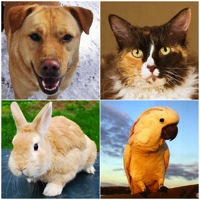


A friendly, easy-going attitude is very desirable in a dog, but no animal will have the confidence to take things in stride unless it is accustomed to going on outings and encountering many different sights and sounds. To become cheerful, reliable companions, dogs must be well socialized.
What Your Dog Might Have Missed
Puppies go through critical periods of social development from birth to sixteen weeks of age. During the first six to seven weeks, they learn from their dam (mother) and their littermates. From their dam, they learn respect for authority, which leads to a more trainable dog. Playing with their littermates teaches them social interaction and how to moderate aggression. In fact, the wrestling sessions enjoyed by young puppies make them less body and sound sensitive, resulting in dogs that are more tolerant of children, loud noises, and other dogs. The ideal time to take a puppy home is when it reaches eight weeks old. By then, it’s mentally mature enough to adjust to leaving its dam and littermates and soon settles into its human family.

Dogs remember all their lives what they learned about the world when they were between seven and sixteen weeks of age. Those nine weeks play a major role in shaping their personality, making them fearless or fearful, outgoing or shy, eager to learn or resentful of training. The brevity of this time period is a throw back to the dog’s wild ancestors. It correlates to when wild pups or cubs ventured out of the den for the first time to hastily learn the lessons of survival. Everything had to be instilled in a hurry, because young animals that made a mistake in the wild rarely got a second chance.
Although domesticated for centuries, dogs still arrive in the world programmed to learn how to handle their environment during their first four months of life. With or without their owner’s help, they will form perceptions of what is safe and what is dangerous. With a good owner’s help, they will be introduced to a friendly world and grow up confident and outgoing. Without human help, they will have chance encounters with frightening noises, strangers, and scary objects, and may grow up defensive or shy.
Uh-oh. That’s pretty scary stuff, especially if you don’t have a clue about Spot’s puppyhood. But a puppy can only be raised once, so there’s no use fretting about what kind of dog Spot might have been with a different start. Instead, start now and help him become the best dog he can be.
Cram Course for Adult Dogs
Socializing Spot isn’t a step-by-step regimen, like training. Instead, it’s part of daily life. Every time Spot goes somewhere he’s never been, does something he has never done, or meets a new person, he is being socialized. The process has only two rules. Rule one is never pet or talk to Spot when he’s fearful. Rule two is always praise him for behaving bravely.
Sugar Needed Time
Jane Dillard and her husband Jim Greenlaw of Tacoma, Washington, researched several Pug kennels before calling one and inquiring about puppies. During the conversation, the kennel owner said a one-year-old adult was also available. The attractive female had a defect called lolly tongue (the tip of the tongue stays outside the mouth when it closes), so the kennel couldn’t show her or use her for breeding.
Sugar appeared to be the perfect Pug, except for her tongue, and Jim and Jane decided to take her. Jane remembers being especially impressed with the breeding kennel because all the dogs were kept in the house. She thought that practically guaranteed a socialized, trained dog with house manners, but she soon found out differently. In actuality, the kennel dogs were allowed only limited freedom in the house and were usually confined to their individual crates. If Sugar was any indication, they were bonded to each other instead of to people, and had no house training whatsoever.
Sugar was somewhat leery of her new home and especially upset to have only humans for company. She was lonesome for the other dogs, and since she didn’t relate to humans as friends, was not comforted by Jane and Jim’s affectionate attention. It took several weeks for her to understand that she would not be chastised for walking from room to room. Housetraining also went slowly, as Sugar needed to become assertive enough to ask to go outside.
Sugar is three years old now and has become much more courageous. She goes outside on demand and enjoys her whole house. But she isn’t the dog she might have been if she had been socialized from puppy-hood. “She’s so passive I grieve for her,” Jane says. “But she’s our special girl and we love her.”
Overcoming Fears
Is Spot leery of strangers, new places, or objects? If he is, remember the first rule of socialization whenever you have friends over or take him on an outing. When Spot looks fearful, don’t reassure him by cajoling or petting, as he will interpret those actions as praise. Anything your dog is praised for he will repeat again and again, so a hesitant, fearful stance could become his learned response to the sight of a new object. Never yank him toward the feared object either. Treatment like that will turn a slight scare into full-blown terror.
Instead of feeding Spot’s fear by babying him, or terrifying him by using force, just confidently approach the new object yourself. Touch it like it was long-lost treasure, and happily invite Spot over to see the wonderful thing. Sitting down by the feared object is an especially good way to encourage your dog to move toward it. Still scared, but curious too. Spot may crawl on his belly, nose outstretched, toward the frightful thing. After he approaches and examines the object, praise him for being a brave fellow. If the object is unbreakable and not too large, toss or roll it away from (never toward) him. This will arouse his natural chasing instinct, and before long he may play with the object himself.
Don’t be surprised if Spot fears something as silly as a garbage bag or a fireplug. Before he is socialized, Spot may see the bogeyman everywhere. And don’t expect instant results. Spot needs to be put in socializing situations again and again. Fears fade slowly, and those backed by bad memories may never disappear completely, but the following suggestions should help Spot learn to face each new situation with a bit more confidence.
Socializing Your Dog At Home
Educational toys for human babies sell well because parents know that while their children play, they are also learning how to manipulate and understand their world. Play learning works best for young adult and active middle-aged dogs too, and their games and toys aren’t even expensive. For example, human babies learn about noise when they play with rattles and other toys that let them control the volume and duration of the noise. Dogs that learn how to create and stop a racket also become more confident around loud noises.
One toy that may help Spot overcome a fear of noise is an empty half gallon or gallon plastic milk container without a top. It doesn’t matter if the container is as big as Spot, because a milk jug weighs practically nothing and can be pulled by the handle. Lay the jug on the floor, and ignoring Spot, turn on the TV or read the paper. Spot may have to overcome an initial fear of this strange object and might approach it and back off several times. Just ignore the whole scene and eventually he will become brave enough to drag the jug, then shake it, and finally bang it against walls and table legs. Like a child with a toy drum, Spot is learning that noise isn’t so scary because it can be controlled. Later, he can graduate to a louder toy. Put a few pebbles inside a milk jug and screw the lid on to make a raucous rattle. Stay in the same room when Spot plays with this noisemaker, as you may have to stop him from chewing off and swallowing the lid.
Noise Sensitivity
An occasional dog is especially sensitive to loud noises. This can be easily cured with patience and a bit of ingenuity. Simply think of every single thing Spot enjoys, and then think of what kind of noise you can make to continue the fun. For example, if Spot looks forward to feeding time, stir his dinner in a metal pan using a metal spoon, before giving it to him. Sometimes drop the pan (no closer than a few feet from him) before you fill it. If Spot can hardly wait for the children to come home from school, celebrate their arrival with applause and cheers. Tailor your noise-making to your own dog’s delights, and soon he’ll recover quickly when startled by a sudden sound.
Savvy Sights
Dogs sometimes spook at people who are wearing odd hats, big sunglasses, flapping rain gear, or other accessories that change the shape of the human body. To teach Spot that there is just a regular person inside those clothes, raid your closet for rain gear, a couple of hats, boots, and anything else that will change your appearance, including Halloween costumes. Get the children involved, they will enjoy the costume party, but be sure they are old enough to understand the purpose of the game and won’t try to frighten Spot.
Begin with a single item, a wide-brimmed hat or a trench coat, and let Spot watch you put it on. Then call him to you for a pat or a treat. If Spot seems a bit wary of you in a trench coat or hat, get down to his level and pretend to tie your shoe. That gives him an opportunity to check out the scary item up close, without a word from you. Always let Spot reach you and make the first move. Then it’s fine to pet him.
When Spot is used to seeing you and your family in silly clothes, have your children (or you) walk weirdly wearing a big coat or boots. Shuffle or hop and make funny noises, but sink to the floor and ignore Spot if lie seems frightened. Wait to pet him until after he approaches and touches you (or your children) first. If Spot is a wary dog, add items gradually. Whatever you do, don’t suddenly appear decked out like Dracula, with flapping arms and a swirling cape, or you could crush his confidence instead of cultivating it.
Touching Without Tension
Teaching Spot to enjoy being touched can lower your blood pressure (petting a dog does that) and help you bond to each other. It should be restful and pleasurable for you both.
After a tiring day, collapse in front of the TV with Spot on your lap or on the floor beside you, and pet him while you unwind. This works best if Spot recently had exercise and is also ready to relax. When petting Spot, handle every square inch of him. Touch him from the tip of his nose to the pads of his toes.
If Spot shies away from being touched on some part of his body, don’t pet that place continuously, but come back to it often with a quick caress. This is quiet time, a time of pleasant communication through touch, not a battle of wills or a wrestling match, so don’t push any issue. Keep your mind on the TV program and your strokes gentle and lazy and Spot may fall asleep. Now you can gently stroke the places that made him uncomfortable. Have you ever noticed that a new ring can be quite annoying, but after you wear it to sleep it feels more natural? This is the same principle.
Out and About
Spot should begin investigating the world beyond your walls as soon as he is lead-trained and vaccinated. Provided he has a gentle disposition, try to have him meet elderly folks and toddlers, gentle children and teenagers, young marrieds pushing strollers, bearded men, and women wearing big hats. While safely outside on lead, Spot will also get used to hearing motors, horns, sirens, and the rumble of the garbage truck. The more people Spot meets and the more sights he sees, the more confident he will become, and this will make him a better companion at home and away.
Short Courses
If your house doesn’t have stairs, find some elsewhere and see if Spot knows how to navigate them. If not, teach him patiently. To do this, deposit him on the third or fourth step, and encourage him to come down. When he is secure going down, sit on the third or fourth step and encourage him to climb to you. Soon navigating a flight of stairs will be a breeze. If Spot is too heavy to lift onto the stairs, you sit on the fourth or fifth step and encourage him to come up and join you.
Short car rides to the park, to visit a friend, or even to nowhere are also good for Spot. Once or twice a week is usually often enough to get him used to the scenery and the motion. Soon he will relax and even sleep peacefully in the car.


